
The general session of an event usually gets the most attention.
It has the biggest room, the largest screens, the main stage, and the moments everyone knows will matter. So naturally, a lot of planning starts there.
But a conference does not stop when the keynote ends. Attendees move into breakout sessions, panels, trainings, and workshops, and those smaller rooms can shape just as much of their experience as the main stage.
When breakout rooms are planned with the same care as the general session, attendees can move from one session to the next without thinking about the technology. Presenters feel prepared. Content is where it needs to be. Technical support is there when it is needed.
When they’re not, the little things start adding up fast.
It can be tempting to think of a breakout room as a scaled-down general session. Smaller screen, smaller sound system, fewer people.
But smaller does not always mean simpler. One room may have a single presenter walking through slides, while the room next door has a four-person panel. Another could include video playback, a remote speaker, or a workshop where attendees need to hear questions from around the room.
Each of those sessions asks something different of the space and the production supporting it. That is why we look at each room on its own, including:
The goal is not to put more equipment in every room. It is to understand what each session needs and build the right level of support around it.
Attendees may move through several rooms over the course of a day, but they are still experiencing one conference. The production should feel connected from one space to the next.
That starts with looking at the conference as a whole, not as a collection of individual rooms. The production team needs to understand how attendees, presenters, content, equipment, and support are moving throughout the day.
Digital signage can help make that movement easier too. Monitors outside breakout rooms or throughout the venue can show session schedules, help attendees find where they are going, and give sponsors another visible place to be part of the event.
That does not mean every breakout room has to look or operate exactly the same. A 50-person workshop has different needs than a 500-person keynote. But both should feel like someone thought through the experience.
Breakout rooms tend to bring out the details that are easy to miss early in planning. A panel may need more microphones than expected, a presentation may include video or audio that was not originally discussed, or a speaker may arrive with a last-minute content change.
On their own, those are all manageable. The challenge is that breakout schedules move quickly, and one small change can affect more than one person or room. A content update has to reach the right operator. An equipment change may affect another session. A presenter arriving late can shrink an already tight turnaround.
That is where good planning makes a difference. When the production team understands the schedule, the session formats, and where the pressure points may be, there is more room to adjust without throwing off the rest of the day.
It is difficult to anticipate every change that will happen onsite. The goal is to build a production plan that gives the team enough information, support, and flexibility to respond when something does change.
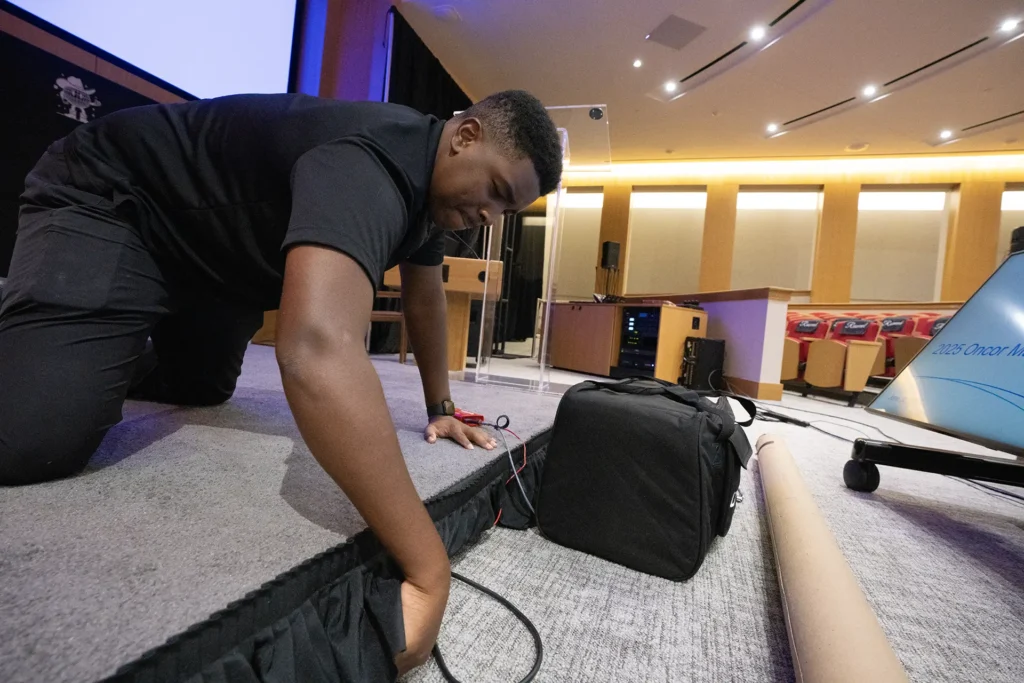
A breakout room can have exactly the right equipment and still fall short without the right support in place.
That does not mean every room needs a dedicated technician. Some sessions call for one, while others can be supported by a technician monitoring several nearby rooms. A high-profile panel, hybrid session, or presentation with frequent changes may need more hands-on attention than a room running the same format all day.
The number and location of breakout rooms also shape the staffing plan. If rooms are spread across multiple floors or different areas of the venue, we may have a floating technician in each area. For conferences with a larger breakout program, we may also have a producer or lead technician focused specifically on those spaces, keeping an eye on schedules, questions, and last-minute changes while the general session team stays focused on its own room.
The goal is to put the right people in the right places, while making sure every breakout room still has a clear connection back to the larger production team.
With one presenter and one screen, managing presentation content may be pretty straightforward. Across several breakout rooms, dozens of speakers, and a full day of sessions, it gets complicated quickly.
A clear process helps keep everything organized. That can mean setting presentation deadlines, checking files before the event, organizing content by room and session, and making sure videos, fonts, and formatting are ready to go before a presenter walks in.
It also gives everyone a clear path for last-minute changes. When the latest version is easy to find and gets to the right room and operator quickly, presenters feel more prepared, the production team can stay on track, and your planners have one less thing to chase down.
This is one of those parts of conference production that attendees may never notice when it is working well, but your presenters and planning team definitely will.
The best time to think through breakout production is while the rest of the conference is still taking shape.
Bringing your production partner in early gives everyone more room to plan ahead. We can review room layouts, session formats, staffing, shared equipment, and transition times before those details start creating conflicts.
It also gives us a chance to catch the things that are easier to solve on paper than onsite. Maybe two sessions need the same piece of equipment, a room layout creates a sightline issue, or back-to-back sessions require very different setups. The earlier we see those things, the more options we have to work through them.
And you do not need to have every detail figured out before starting the conversation. Part of our job is asking the right questions, anticipating what may be needed, and helping you build a plan that works across the entire conference.
As your breakout schedule comes together, a few practical questions can help shape the production plan:
You may not have every answer right away, and you do not need to.
Starting the conversation early gives your production team a chance to ask the right questions, flag anything that may need more attention, and help you build a plan that works before you get onsite.
Breakout rooms should not get whatever equipment, staffing, or planning time is left after the general session is finished. They are part of the attendee experience, and they deserve to be planned that way.
At Sound Ideas, we work with your team to plan production across the full conference, not just the main stage. That means understanding what is happening in each room, where the pressure points may be, and what support will help the day run the way it should.
A multi-room conference may happen in a lot of different spaces, but for your attendees, it is still one experience. Our job is to help you plan it that way.